• There has been a recent cluster of spammers accessing BARFer accounts and posting spam. To safeguard your account, please consider changing your password. It would be even better to take the additional step of enabling 2 Factor Authentication (2FA) on your BARF account. Read more here.

California unveils mandate to phase out diesel trucks

Hang them underneath the trailer.

For sure Musk and Tesla have considered every possibility. Will have to wait and see what they come up with by that time.

The battery packs are packaged in the tractor of the Semi now. The 500-mile range version should have up to a 1000 kWh of battery.


That is ~10 Model S batteries. I wonder how they fit that.

A Tesla "Megapack" grid battery, the kind at Moss Landing, is 3,000 kWh. to give us an idea. Maybe 2-3 doors. I imagine that the Simi will be more compact.
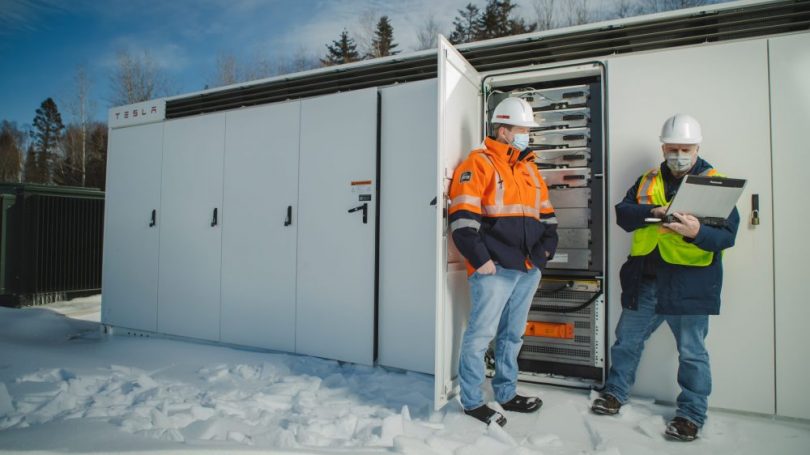

SJE_Tesla-32-scaled-e1618507980797-810x455.jpg
 
Last edited:
I would count out Nikola. Just check out the scandel in the news or my post.

Hydrogen is still equivelent to ~$18 / gallon of gasoline, so there is that.

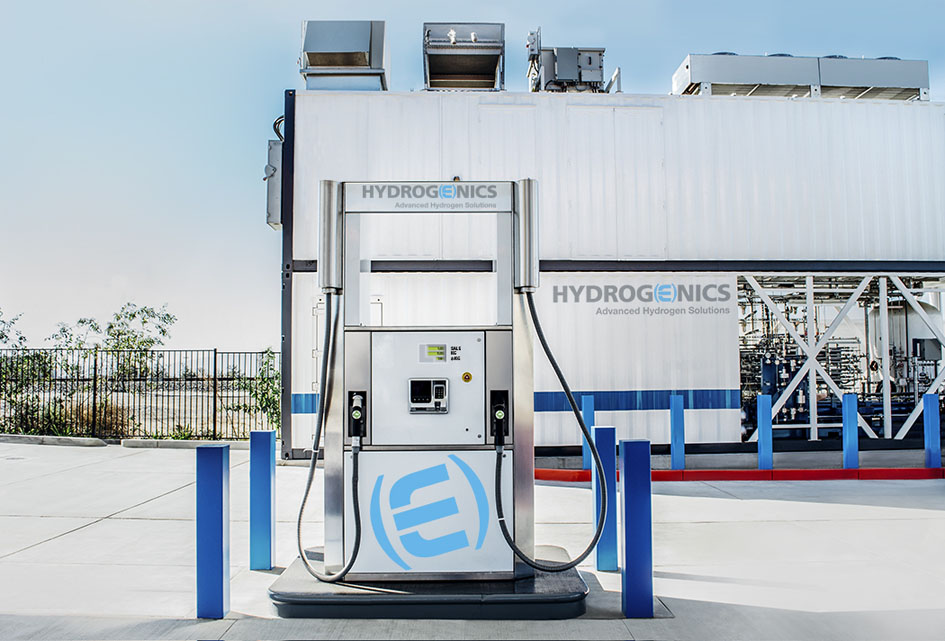
I live near 2 hydrogen stations and TrueZero has had a hard time 1.keeping them runing and 2. supplying them with hydrogen. It look like they have them working now, and many have switched to 100% renewable hydrogen. Other stations use natural gas refroming, which makes me thing, why not just fill up with natural gas, we already have the infastructure and pressures are lower than hydrogen.


Hydrogen vehilces still have a battery like a hybrid. Hydrogen just does not have a lot of advantages. I have been intersted in them since the 90's its been a disapointment.

On Nikola, sure. It's not really about one company as much as industry trends. This is what truck companies are banking on, and that's largely because the problems are a lot more solvable than the problems of pure battery EV trucks.

The cost of green hydrogen can vary wildly, especially now, but the overall trend is downward. One company in Norway expects to be able to produce green hydrogen at $1.50 per Kg by 2025. I'm not sure where you are getting the $18 figure from,

With that being said, I think that hydrogen will likely be the solution for commercial freight trucks and the like, not consumer vehicles. The infrastructure is pretty expensive to put in, and maintain, when thinking of some sort of gas station replacement, but building that up specifically for commercial trucks is much more viable.
 
It would be a far better plan to fully electrify and expand the rail system, than to push autonomous long haul trucking. Electric? Maybe. But I bet not. Autonomous? Not a snowballs chance in the foreseeable future.

Quite simply, fully autonomous CARS will have to be accepted by law in all 50 states before any sane federal legislator would risk voting to automate 100,000lbs of potential high velocity carnage. Even more so, the insurance industry as a whole needs to figure out who gets the bill when one does crunch a bus load of affluent high school kids. (I did say orphans and shelter pets... but really, who ever fights for those?)

And just because a law has been made, doesn't mean it will happen. We made laws to mandate fixing our roads. How those turn out? High speed rail? How about that 1980's law that banned all passenger diesel vehicles by 2007?

I mean, that is cute to say, but full stop, citizens will not allow the dedicated real estate required. Just try and build something more mission critical like Commuter transit or high density housing developments.

The problem with a rail systems is they require a vast amount of dedicated real estate that throws anyone who lives near it into a frenzy.

Trucks on the other hand use existing infrastructure on roads that everyone wants to make better and quieter.
 
On Nikola, sure. It's not really about one company as much as industry trends. This is what truck companies are banking on, and that's largely because the problems are a lot more solvable than the problems of pure battery EV trucks.

The cost of green hydrogen can vary wildly, especially now, but the overall trend is downward. One company in Norway expects to be able to produce green hydrogen at $1.50 per Kg by 2025. I'm not sure where you are getting the $18 figure from,

With that being said, I think that hydrogen will likely be the solution for commercial freight trucks and the like, not consumer vehicles. The infrastructure is pretty expensive to put in, and maintain, when thinking of some sort of gas station replacement, but building that up specifically for commercial trucks is much more viable.

I stand corrected.

The cost of local hydrogen is ~$20/ kg :rofl

The car companies like Toyota and Honda are paying for the cost of the hydrogen with issued cards.

1 kg of hydrogen is roughly 1 gallon of gasoline. This may change if fule cells get more efficient.


"Norway expects to be able to produce green hydrogen at $1.50 per Kg by 2025".

That would require a fundamental break-through in energy - one that we would all benefit from, but not likely.

The "Wheel to Wheel" efficiency of a fuel cell vehicle is horrible. A battery electric vehicle travels 3-4 as far on the same amount of energy as a Battery Electric Vehicle.

Hydrogen electrolysis, transportation and compression to 10,000 psi takes a lot of energy.

And if you think EV infrastructure is bad, consider Hydrogen. 4 stations are offline at this moment for whatever reason. Can't fill/charge up at your home https://cafcp.org/stationmap


Campbell Hydrogen Pump
Fc-g2idakAA9-8y

Fc-hKUtaMAAuibM
 
Last edited:
Thank you for conceding autonomous long haul driving is inevitable. That clarifies part of your bizarre nonsense protests. I already suggested the electrical hub stations you are saying won't exist will, because California is literally mandating the changes you say won't happen have to happen.

If I had to guess, as this progresses towards the more cost effective electric model, more and more Federal Funding is going to be made available to get truck stops to install sustainable infrastructure upgrades to get these truck stops creating more of their own energy to power the trucks (wind and solar)

:dunno

As usual, you're not paying attention to anything anyone else is saying and yet only listening to your rants.

First of all, I don't giving a flying fuck what California mandates. California doesn't build anything when it comes to commercial transportation. The private sector does that. Thus, they cannot determine what will be physically possible in 2035 and, as usual, the political leadership of the state is trying to make a political statement more than anything else. In my professional opinion, having taken a major role in the previous changes the state created and lead the way on, this is nothing like the DPF requirements that the state pushed on the industry. That, at least, had the real capability of being done by the timelines put in place. It was the OEMs that pushed back because they didn't want to invest in the engineering and cost of materials in order to implement the required changes. It was only after the federal government got behind the endeavor that they finally decided it was possible to make it happen. Truth be told, it wasn't exactly difficult for them to do it. They just had to be mandated to give a shit. Pretty much like everything else in American history. Corporations don't care until they're forced to care.

However, in this case, we're not talking about something that OEMs can produce. They absolutely cannot produce electricity needed to charge the batteries of these class 5+ vehicles that they're going to be required to build. That falls on public utility companies and they simply do not have the capacity to energize a charging system capable of charging an entire fleet of tractors when they still have to provide power to the rest of the residential and commercial customers they currently provide service for. It's 100% not possible and, in my mind, that situation will not change before 2035. Indeed, California is putting the cart before the horse. Figure out the infrastructure needs before you start setting deadlines with the OEMs being required to run 100% electric fleets.

Secondly, I don't care about OTR trucking being forced to go electric as it doesn't really affect my industry at all short of parts and trucks being delivered to my sites and that's already fucked up anyway with diesel and CNG motive power. What I was getting at by saying that platooning is possible is merely my observation that it can be done with OTR trucking and that alone could remove many if not most drivers from the equation. It still doesn't solve the charging issue, though. When it comes to my industry and my fleets though, platooning means nothing as it won't work for what we do at all just like removing drivers from our industry doesn't work at all either.
 
Last edited:
I stand corrected.

The cost of local hydrogen is ~$20/ kg :rofl

The car companies like Toyota and Honda are paying for the cost of the hydrogen with issued cards.

1 kg of hydrogen is roughly 1 gallon of gasoline. This may change if fule cells get more efficient.


"Norway expects to be able to produce green hydrogen at $1.50 per Kg by 2025".

That would require a fundamental break-through in energy - one that we would all benefit from, but not likely.

The "Wheel to Wheel" efficiency of a fuel cell vehicle is horrible. A battery electric vehicle travels 3-4 as far on the same amount of energy as a Battery Electric Vehicle.

Hydrogen electrolysis, transportation and compression to 10,000 psi takes a lot of energy.

And if you think EV infrastructure is bad, consider Hydrogen. 4 stations are offline at this moment for whatever reason. Can't fill/charge up at your home https://cafcp.org/stationmap

That pricing is truly insane, like 4x what it was earlier this year.

https://www.spglobal.com/commodityi...-nel-targets-15kg-green-hydrogen-cost-by-2025

Here is where NEL in Norway said that they would get to 1.50 per kg of hydrogen by 2025, only in some markets. They fully admit that it's dependent on how expensive electricity is in the market.


Again, all of the issues with infrastructure is why I don't think hydrogen is going to be a widely used consumer product. I think it'll be primarily commercial. Dealing with the extra weight and size for the battery packs is OK for consumer vehicles, for commercial vehicles, particularly freight trucks, the extra weight becomes a much larger problem, and one there probably isn't a great solution for. The infrastructure maintenance and cost are surmountable issues.
 
I mean, that is cute to say, but full stop, citizens will not allow the dedicated real estate required. Just try and build something more mission critical like Commuter transit or high density housing developments.

The problem with a rail systems is they require a vast amount of dedicated real estate that throws anyone who lives near it into a frenzy.

Trucks on the other hand use existing infrastructure on roads that everyone wants to make better and quieter.

Since we were talking about autonomous long haul trucking, that's all my opinion applied to.
Fortify and electrify the longer transcontinental runs. Then create the hubs necessary for your fantasy electric big rigs at points along the rail system. Local trucking takes it to the end points from there. LONG HAUL trucking is reduced/ended. Not ALL trucking. And the delusion that is autonomous long haul is no longer "needed".
 
That pricing is truly insane, like 4x what it was earlier this year.

https://www.spglobal.com/commodityi...-nel-targets-15kg-green-hydrogen-cost-by-2025

Here is where NEL in Norway said that they would get to 1.50 per kg of hydrogen by 2025, only in some markets. They fully admit that it's dependent on how expensive electricity is in the market.


Again, all of the issues with infrastructure is why I don't think hydrogen is going to be a widely used consumer product. I think it'll be primarily commercial. Dealing with the extra weight and size for the battery packs is OK for consumer vehicles, for commercial vehicles, particularly freight trucks, the extra weight becomes a much larger problem, and one there probably isn't a great solution for. The infrastructure maintenance and cost are surmountable issues.

The TrueZero H2 stations have always been pricy. ~2 years ago it was $17/kg.

$1.50/ kg by NEL is a lofty goal, but I wonder if there was a Norwegian Krone to US$ error.

Google says that there is ~33.3 kWh of energy in 1kg of H2

$1.50/ 33.3 kWh = $0.05 / kWh


>>>>> that does not seem likely, because NEL still has to ....

1. compress the H2 to get it into the trucks
2. drive the trucks around to deliver the hydrogen
3. maintain the stations
4. compress the hydrogen to ~10,000 psi+ to get it into the car. That is why there are huge powerlines going to these hydrogen stations. There is a lot of compressor and chiller hardware in there.

hydrogenics-hydrogen-fueling-station_100605683_l.jpg
 
Last edited:
Towing test ride between Gas and Electric PU Trucks. Shows real world problem towing distances with electric vehicles. Electric Truck and Trailer initially computed a 160 mile range on a full charge. Result was the electric truck barely made half the distance.
https://youtu.be/-e55Vued028?t=894
This result shows its not practical towing with electric vehicles. Cross Country trip pulling a Trailer. First day Sacramento, second day Emigrant Gap, third day Reno.
Can't operate Semi Trucks with ridiculously short distance per-charge. aka beware of the Sushi.
 
Towing test ride between Gas and Electric PU Trucks. Shows real world problem towing distances with electric vehicles. Electric Truck and Trailer initially computed a 160 mile range on a full charge. Result was the electric truck barely made half the distance.
https://youtu.be/-e55Vued028?t=894
This result shows its not practical towing with electric vehicles. Cross Country trip pulling a Trailer. First day Sacramento, second day Emigrant Gap, third day Reno.
Can't operate Semi Trucks with ridiculously short distance per-charge. aka beware of the Sushi.

Hoovie did a video about it as well. He took an empty trailer 30-35 miles and picked up a cord Model T truck for the ride back. Not even 100 miles, and it was almost dead.

This problem is easy to solve, especially with trucks.

Lithium batteries are basically bombs. How big do you want to make them? We need to be investing a whole bunch more of our time an energy to either improve battery tech, or find an alternative because IMO, we ain’t there yet. We’re close, but the battery tech is just shy of what it needs to be.

Almost all of my RC stuff is lithium now. When one of those batteries let’s go, it’s quite the show. We have special bags we keep on board the airplane now to put runaway batteries in, and it’s serious shit when they do, and we’re not allowed to charge our PED’s in the cockpit anymore because we’ve had a few runaways.

“Bing bing”

“Yes captain, this is Janice.”

“GET THE BAG, I’M THROWING MY IPAD OUT THE DOOR IN THE GALLEY, IT’S ON FIRE!!!!!”
 
Anyone know about a new law to ban Diesel trucks pre DEF, so 2010 and older? Sister BF keeps telling you wont be able to register a non-def equipped diesel based on a certain GVW.

I can't find that info anywhere.
 
A new law? On top of the old one? Because what you're talking about sounds like the old one.
 
A new law? On top of the old one? Because what you're talking about sounds like the old one.

No idea. He was saying that looking at used 2005 7.3 f250 is a waste cuz I wont be able to register them soon. That seemed pretty serious and I can't find legit into if it's true or not.
 
Commercial fleets faced that issue. I haven’t paid attention for a few years but think the phase out was up to 2010 diesel motors, so yes the old law. I thought it was only for commercial fleets. Thought there was a previous discussion and remember that the CARB person came up with the plan had falsified his credentials, but it was green so carry on.
 
No idea. He was saying that looking at used 2005 7.3 f250 is a waste cuz I wont be able to register them soon. That seemed pretty serious and I can't find legit into if it's true or not.

They didn't have a 7.3 in 05..it was a sucky 6.0...:laughing
 
FefO5GSVEAAL5am


About time. Get your popcorn out to watch this drama.

I'm happy to see that the US will have better diversity in energy used for transportation.
 
Last edited:
Back
Top