afm199
Well-known member
Fine dude. Your dick is bigger than mine. You car experience translates directly into moto experience and you are the man. And be sure and pump up your tires will you? The manufacturer recommends 38/42


No slang/porr mans speak allowed.


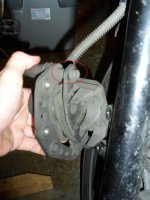
Uneven pad wear like that, where one pad wears faster than the other, is a sure sign of a binding caliper. Three causes most common on a floating caliper setup like yours:
I suspect #1 is your problem, but I'd redo the front brakes entirely:
- Caliper slides dry or tweaked
- Piston(s) binding in bores, not fully retracting when lever released
- Excessive hydraulic pressure caused by incorrect lever adjustment or too much fluid in reservoir, which will cause piston seizure like #2
- Dismantle and clean out the piston bores.
- Totally service the caliper hardware paying close attention to the sliders for smooth, unrestricted movement.
- Replace the disc if it's scored or too thin, or resurface it if it's OK.
- New pads.
- Flush the fluid with DOT 4 or DOT 5.1 making sure to not overfill it when you're done.
What Motech said.
I'd also be very curious what pads you were running. My experience with greens is that they work well, but don't last very long. I literally wore a set out (most of the material gone) in a single day at the track.
A. You have to check your brakes often.
B. You get what you pay for.
C. above post is wrong for many reasons. Metallic pads do NOT need heating up unless they are high end race pads. Organic pads DO NOT stop better and they don't work well on rotors that have been used with semi metallic pads unless the rotors are cleaned. And good enough to lock up the brakes is not how you judge brake pads. suggest a good grade HH semi metallic pad from Galfer, EBC or the stock OEM pads.

O stop with the technical speak it's obviously rider error. He's braking more on one side than the other cuz he's right handed.

Cliff notes:
-will clean the calipers THOROUGHLY, including dismantling calipers
-new rotor
-flush fluid (doing stainless line while everything's apart)
-new pads (obviously)
that about cover it?
FWIW, pad materials and rotor design is one place where where motorcycles and cars do tend to differ, in my opinion.

I think you miss the point of my posts. With some people, like I said, it turns into a dick measuring contest, and "if your's ins't as big as mine, your stupid and wrong, so go home." I could care less what the man does. I also speak from personal experince. I wasn't the one who started flinging shit around the room when someone pointed out what the brake pad manufacturer recomends, calling them an idiot, was I?
Both convert kinetic energy into heat. Both use rotors and a sacraficial friction material on pads. Both use calipers (either type) and slotted/drilled/vented rotors. The primary differences are in size. The fundamentals apply equally to both.

noob question though: should there be any lubricant or anything on the external "pins" the outer pad rides on?
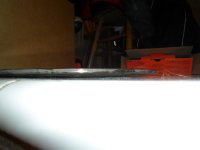
as mototireguy guessed, the rotor is scored, mostly at the bottom edge of the pad/backing plate; there's a band in the center as well where the pad material was cleared off the rotor, but almost imperceptible as far as actual scoring there. rotor is being replaced, and might as well do a stainless line while everything's apart anyway.
Cliff notes:
-will clean the calipers THOROUGHLY, including dismantling calipers
-new rotor
-flush fluid (doing stainless line while everything's apart)
-new pads (obviously)
that about cover it? and thanks for the help/suggestions/input.
Same argument could be made about a lot of things between Motorcycles and Cars.
Cars in my observation tend to use fewer pistons (1 or two piston designs seem common.) Because of the nature of car tires, the rotors are typically shrouded by the wheel requiring ducting on high performance applications for cooling. Cars seem to be more likely to use adhesive pad design for race use than a motorcycle. Car rotors tend to be solid mounted ventilated designs, where motorcycles tend to use floating drilled rotors.
Because motorcycles are lighter, we tend to run thinner rotors that come up to temperature faster than car rotors.
My observation is that making car brakes work well under extreme use can be more difficult than with motorcycle brakes. I've driven a few cars hard enough to make the brakes visibly smoke - can't say the same for a bike.