• There has been a recent cluster of spammers accessing BARFer accounts and posting spam. To safeguard your account, please consider changing your password. It would be even better to take the additional step of enabling 2 Factor Authentication (2FA) on your BARF account. Read more here.

Official aerodynamic / winglet thread [SPOILERS: Nerds inside !!111!]

The winglets most likely help keep the front pushed into the ground which should allow the riders*theoretically* get on the gas quicker / harder.

Motogp has millions spent on research and with the electronics they have I'm sure they noticed a difference. Even if it's just a third of a second per lap that adds up nicely for an entire race.

Plus if the rider feels like he has better control of the front the confidence attribute is priceless.
It is only about 1.4 kph faster per lap on Qatar, which is doable, but a third of a second is HUGE at this level of racing. At Qatar that's 7 seconds by the end of the race.

I think this has more to do with this:
Rossi: Ducati top speed advantage "a problem"
And maybe that advantage comes from the winglets, or maybe it does not. Ducati has led top speed many times, before winglets.

Motorcycles have a huge frontal area compared to autos. While some might argue that streamlining the race bikes have them going faster, I have not seen any actual numbers, just speculation that a MotoGP, Moto2, or Moto3 bike is so different that they require a large percent less horsepower to push through the same air. I don't think it is possible or everyone would be doing it. You have a engine, radiator, rider, tank, etc., no matter what. You can only go so small with a fairing and that is it. There isn't anything extraordinary about MotoGP fairings, really. The most efficient fairings are long bullet shaped nose things that would be too awkward to use on a road racer.
 
It is only about 1.4 kph faster per lap on Qatar, which is doable, but a third of a second is HUGE at this level of racing. At Qatar that's 7 seconds by the end of the race.

I think this has more to do with this: And maybe that advantage comes from the winglets, or maybe it does not. Ducati has led top speed many times, before winglets.

Motorcycles have a huge frontal area compared to autos. While some might argue that streamlining the race bikes have them going faster, I have not seen any actual numbers, just speculation that a MotoGP, Moto2, or Moto3 bike is so different that they require a large percent less horsepower to push through the same air. I don't think it is possible or everyone would be doing it. You have a engine, radiator, rider, tank, etc., no matter what. You can only go so small with a fairing and that is it. There isn't anything extraordinary about MotoGP fairings, really. The most efficient fairings are long bullet shaped nose things that would be too awkward to use on a road racer.


I realized I was being over dramatic when I said a third :laughing I should have realistically said a couple hundreds here and there.
 
Motorcycles have a huge frontal area compared to autos. While some might argue that streamlining the race bikes have them going faster, I have not seen any actual numbers, just speculation that a MotoGP, Moto2, or Moto3 bike is so different that they require a large percent less horsepower to push through the same air. I don't think it is possible or everyone would be doing it. You have a engine, radiator, rider, tank, etc., no matter what. You can only go so small with a fairing and that is it. There isn't anything extraordinary about MotoGP fairings, really. The most efficient fairings are long bullet shaped nose things that would be too awkward to use on a road racer.

motorcycles have a SMALL frontal area compared to autos, at least 1/3rd of a regular car. prob 1/5-1/8th of a truck. however, the drag coefficient is HIGHER than autos because motos are so short and the wheels have minimal covering. these two factors offset slightly. this allows 100HP to get a bike over 140mph where as a 100HP compact car can barely do 120mph

road racing motorcycles are not streamlined in the classic Bonneville sense of the word. they cant cover either tire entirely and cant extend the other bodywork past the front and rear tires. the bodywork cant cover any part of the rider either.

there are plenty of extraordinary things about GP fairings. the bikes are freakin' tiny for one, smaller than some 600cc bikes, which reduces the overall drag. all the teams seem to have developed little aero additions to help with airflow around the riders hands. they also invest a lot of effort into optimizing their ram air and radiator air flow. front fenders, little ducts for cooling clutches, fuel, and electronics - it all helps. im sure theres more. even the Moto2 bikes are smaller and more aero optimized than CBR600RR, allowing their paltry HP to push another 10mph compared to the WSS variants.

Duc actually made their nose fairing wider to allow for wider winglets. the increase in frontal area is small, a few square inches. but they def added drag with that and the winglets. obviously it isnt an issue for them.
 
Last edited:
Yeah, motorcycles have WAY smaller frontal area than a typical auto. However, that wheel spinning out there in front yields horrible drag. An un-faired motorcycle generally has pretty bad aeros.

As for winglets... no. :x
 
i put tiny aero spokes on my bicycle, huge change in drag >30mph compared to 0.5mm thicker round spokes. i cant imagine how much drag GP wheels at 350kph produce.
 
Why not go full hog with an aero tt bike disc wheel?

Because of crosswinds. It's the reason why they only do it in the rear on days without ridiculous wind. The only time you'll see a front/ rear disc on an indoor velodrome.

I used to race on the velodrome and was dumb enough to try to ride with a disc on the street, never again.
 
i put tiny aero spokes on my bicycle, huge change in drag >30mph compared to 0.5mm thicker round spokes. i cant imagine how much drag GP wheels at 350kph produce.

I think what sucks even more if having to pop out from the wind shield at the 150+mph lol I bet it feels like it's trying to throw you off the bike.
 
I think what sucks even more if having to pop out from the wind shield at the 150+mph lol I bet it feels like it's trying to throw you off the bike.

150mph is no big deal. i dont even notice it anymore. the second u roll off and touch the brakes, u are probably already below 120mph.

not sure about 217mph though.
 
Because of crosswinds. It's the reason why they only do it in the rear on days without ridiculous wind. The only time you'll see a front/ rear disc on an indoor velodrome.

I used to race on the velodrome and was dumb enough to try to ride with a disc on the street, never again.

I get that, but none of the GP bikes have the rims rounded on the inside. It's a rounded outer tire and then a flat loop on the inside. If we're saying that spoke shape matters, why aren't they doing something about the big flat spot on the inside of the wheel that creates a low pressure area?
 
any increase in moment of inertia for the wheel would likely offset any gains with reduced drag. bicycle wheels already deal with this. profiled deep wheels are heavier and generally not used for the mountains. the extra mass from doing something similar on a moto wheel would not be negligible.

also my bicycle spoke comparison isnt perfect. moto wheels have much wider rims and far fewer spokes. giving the spokes an aero profile may not do anything because of the low pressure area created by the tire/rim.
 
any increase in moment of inertia for the wheel would likely offset any gains with reduced drag. bicycle wheels already deal with this. profiled deep wheels are heavier and generally not used for the mountains. the extra mass from doing something similar on a moto wheel would not be negligible.

also my bicycle spoke comparison isnt perfect. moto wheels have much wider rims and far fewer spokes. giving the spokes an aero profile may not do anything because of the low pressure area created by the tire/rim.

Yeah, hence why I'm curious why they haven't attacked the much easier bit of the wheel and profiled it.

Are MotoGP bikes limited to materials construction on wheels? Are they already using carbon or magnesium and at the bare minimums?
 
composites are illegal. only magnesium or aluminum alloys are allowed for wheels.

all the bikes add ballast to make the minimum weight.
 
composites are illegal. only magnesium or aluminum alloys are allowed for wheels.

all the bikes add ballast to make the minimum weight.

I know they add ballast, that's unsurprising. But they're definitely not adding it to the rotating mass which they want as light as possible.

What about carbon profiling covers on the wheels? Liable to come off and cause damage?
 
a few years ago a guy here worked in the GP paddock. he said the HRC wheels werent as light as the other manufacturers, but they def performed a ton of R&D getting them exactly the way they wanted.

carbon covers attaching to the wheels would prob be illegal. theres no rule limiting what can/cant be attached to the wheels. im sure Mike Webb would add one in a heartbeat if someone tried to bolt on aero covers :laughing.

wheels must pass an FIM certification to be run which has a bunch of diff tests. all the signed forms are on the FIM website. i just found that the M1 wheels are made from Mg ZK60A allow, which is Mg-Zn-Zr. the front is min 1995g and the rear is 2650g without paint. they are made by Marchesini. the Suzuki front is a little heavier at 2015g but the rear is a little lighter at 2430g, same material.

a pair of retail Marchesinis is 7700g fitted, so that prob includes the sprocket carrier and bearings too. i kinda doubt all that is 3.2kg, so the GP wheels are probably VERY light. they do get inspected and replaced often.
 
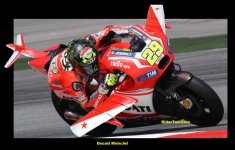
After today's trouncing by the winglet special, I feel we need the following, winglets-in-perspective break.

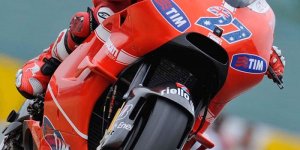
I also want everyone to remember back when Ducati had style with their winglets, thus we have included a picture of Stoner's very tasteful wings.
 

Attachments

  • Iannone Winglet one.jpg
    Iannone Winglet one.jpg
    16.8 KB · Views: 95
  • iannone_jet oneB.jpg
    iannone_jet oneB.jpg
    50.7 KB · Views: 11
  • Stoner wingletsB.jpg
    Stoner wingletsB.jpg
    43.3 KB · Views: 13
composites are illegal. only magnesium or aluminum alloys are allowed for wheels.

I was racing at Thunderhill years ago, I personally observed a guy power out of T6 and his carbon-fiber rear wheel basically exploded. It wasn't a pretty sight.
 
I was racing at Thunderhill years ago, I personally observed a guy power out of T6 and his carbon-fiber rear wheel basically exploded. It wasn't a pretty sight.

I'm curious on specifics here. CF wheels can get weak for a bunch of different reasons. How much time were they in the sun? Did he crash on them before?

Does anyone remember a couple years ago a backmarker ducati 1098 in WSBK having tis wheels separate from the hub? It brake about 1/4 way into each spoke. Those wheels were replaced fairly often but not put under the same stresses of GP. I imagine the CF wheel incident and this were similar outside of material.
 
take note the 2000' ZX12R had 4 "winglets" to basically smooth airflow around the fairing/bike. A first for a stock bike; details:

Source:
http://www.totalmotorcycle.com/photos/2001models/2001models-Kawasaki-ZX-12R.htm

In order to make it as aerodynamic as possible, the ZX-12R spent more time in a wind tunnel during its development phase than any motorcycle in Kawasaki’s history. Due to the monocoque chassis design, the ZX-12R is already narrower than any other machine in its class. The front cowl wraps in tighter ahead of the radiator to reduce frontal area and enhance airflow through the engine compartment. Small winglets on either side of the fairing may be mistaken for creating downforce when they actually separate airflow around the motorcycle, preventing turbulent air coming off the front wheel from disturbing the laminar airflow along the upper portion of the fairing. Separating the laminar flow and turbulence greatly enhances the fairing’s coefficient of drag. To further reduce drag there are also small wind deflectors cast into the bottom of the forks that deflect the turbulent air coming off the fork and brakes out and around the lower part of the fairing, where resistance is low, instead of allowing this air to flow inward toward the engine, where resistance is high. Additionally, the ZX-12R has a passenger seat cover that easily attaches to provide a sleek and aerodynamic custom appearance for solo riders.
 
Back
Top