
-
There has been a recent cluster of spammers accessing BARFer accounts and posting spam. To safeguard your account, please consider changing your password. It would be even better to take the additional step of enabling 2 Factor Authentication (2FA) on your BARF account. Read more here.
You are using an out of date browser. It may not display this or other websites correctly.
You should upgrade or use an alternative browser.
You should upgrade or use an alternative browser.
Sick Excuse for a Comic-SJ Mercury 4-26
- Thread starter bergmen
- Start date

HappyHighwayman
It's all in the reflexes
http://rationalwiki.org/wiki/Freedom_of_speech#Imaginary_rights_relating_to_freedom_of_speech
Imaginary rights relating to freedom of speech
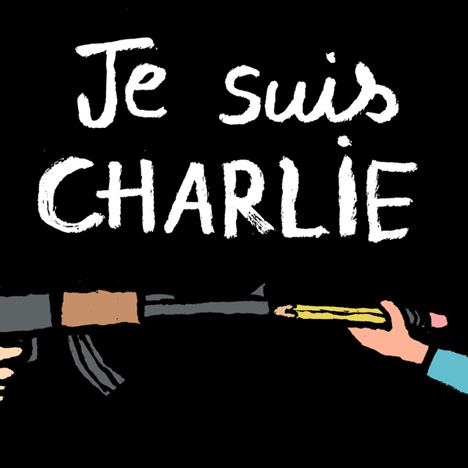
The idea of freedom of speech is often taken to extend far beyond the actual act of speech, or taken to be much more limited than it really is. The former is known as the "right not to be criticized" and the latter as the "right not to be offended."
“”Everyone is in favor of free speech. Hardly a day passes without its being extolled, but some people's idea of it is that they are free to say what they like, but if anyone else says anything back, that is an outrage.
—Winston Churchill
Oftentimes a media figure will say something incendiary, an academic will publish a controversial paper, or a newspaper will publish a polemic piece, which triggers immense backlash and criticism. The original author and their ardent defenders will accuse their critics of trying to "censor" them, insisting that their right to freedom of speech or press is under attack. In the U.S., this is often invoked by Fox News contributors and their ilk. In reality, they are arguing that their right to freedom of speech also guarantees a right to be free from criticism, conflating strong disagreement with the contents of an act of speech with an attack on their right to speech itself. Ironically, criticism itself is protected speech, so enforcing this imaginary right would infringe on the actual free speech rights of the detractor.[18] In other words, you can bitch all you want, but you can't stop people from bitching at you.


Ogier le Danois
New member
Yes I do! Go talk to a neglected child and see what they think of something like this. I have, many time and their lives were totally hell. They'll never get over it.
I guess that since I adore children and try to be my best with them (and being the brother of two sisters who were sexually abused by my father since they were six months old) makes me pretty sensitive to this shit.
Pardon me for my outrage, just go somewhere else on the forum, would you please?
Dan
The purpose of cartoons like this is to raise awareness of societal ills. Despite what you feel, it is shining a light on bad aspects of our culture.
Think of it that way and it may give you some peace.

Erbuck
Power Lurker
One of my favorite New Yorker cartoons from when I was a kid had a scene in a patent office with a nervous guy holding his hat and another guy pointing a rifle-like thing out the window. The caption underneath the cartoon was "Death Ray! Bah! It doesn't even slow them down!". I think it was from the Adams guy that created the Adams Family.
I think the OP should ask to have this thread closed due to unwanted response.
I think the OP should ask to have this thread closed due to unwanted response.

Hooli
Bonafide
This thread is not going the way that that the OP wished. 
HappyHighwayman
It's all in the reflexes
This thread is not going the way that that the OP wished.
I'm still curious if he thinks all potentially forms of offense entertainment should be banned, or just the types that offend him personally. And if so, who gets to decide what's offensive?


Johndicezx9
Rolls with it...
I'm still curious if he thinks all potentially forms of offense entertainment should be banned, or just the types that offend him personally. And if so, who gets to decide what's offensive?
He never said anything about "banning", that's coming from you I think, he just said he didn't like the cartoon and why....

HappyHighwayman
It's all in the reflexes
He straight up implied it shouldn't have been printed.
Johndicezx9
Rolls with it...
He straight up implied it shouldn't have been printed.
Not really... He said he didn't like it and wrote the cartoon syndicate presumably that he didn't like it.
Sorry, I'm not seeing your reason for outrage as much as I'm not seeing his.
HappyHighwayman
It's all in the reflexes
Fair enough

AbsolutEnduser
bike r
nice (also not Saleilmoon!)
nice

Ant
Pink Freud
It probably struck a personal nerve with the OP. Then barf took over and shellacked him good! Hope he knows we're just having some fun and he doesn't leave
Last edited:

Entoptic
Red Power!
I don't get it. The comic series is called "Pardon my planet". It's like going to a website that will offend you and being offended.

Blankpage
alien
Outrage, its how we internet.
HappyHighwayman
It's all in the reflexes
Ironically as well due to the thread several more people read it that otherwise would not have.
Johndicezx9
Rolls with it...
It probably struck a personal nerve with the OP. Then barf took over and shellacked him good! Hope he knows we're just having some fun and he doesn't leave


bruceflinch
I love Da Whores
- Joined
- Nov 17, 2014
- Location
- Bay Point
- Moto(s)
- Present: Cage
Past
305SS
RD400
CB500 RD250
CB360
XS650
R1200R
XT225
ST1300
Vstrom 650
- Name
- Bruce


Sharky
Well-known member
I'm still curious if he thinks all potentially forms of offense entertainment should be banned, or just the types that offend him personally. And if so, who gets to decide what's offensive?
It's me and you CANnucks would be screwed.