• There has been a recent cluster of spammers accessing BARFer accounts and posting spam. To safeguard your account, please consider changing your password. It would be even better to take the additional step of enabling 2 Factor Authentication (2FA) on your BARF account. Read more here.

How many riders switched to LED headlights from halogen?

I'm sure this has been covered before, but the technology has probably evolved since the last thread on it.

What are people's experience?

Pro's?
Con's?
I redid all my rear lights and turn signals if my new headlight that comes in can use led i will swap that also
 
Started with rear then im moving to the front
 

Attachments

  • Screenshot_20260905_000536_Gallery.jpg
    Screenshot_20260905_000536_Gallery.jpg
    1.2 MB · Views: 3
  • Screenshot_20260905_000542_Gallery.jpg
    Screenshot_20260905_000542_Gallery.jpg
    1.2 MB · Views: 3
  • Screenshot_20260905_000432_Gallery.jpg
    Screenshot_20260905_000432_Gallery.jpg
    1.6 MB · Views: 3
  • Screenshot_20260905_000405_Gallery.jpg
    Screenshot_20260905_000405_Gallery.jpg
    1.5 MB · Views: 3
  • Screenshot_20260905_000338_Gallery.jpg
    Screenshot_20260905_000338_Gallery.jpg
    1.4 MB · Views: 3
  • Screenshot_20260905_000312_Gallery.jpg
    Screenshot_20260905_000312_Gallery.jpg
    1.4 MB · Views: 3
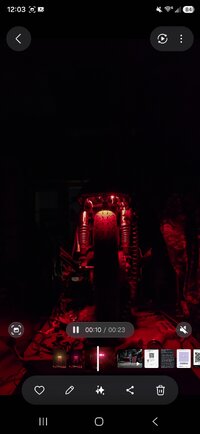
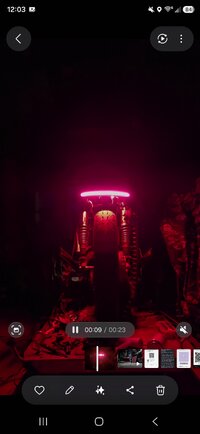
Sticking this video here so you can see how sharp a line an proper LED can throw. 10:00 min into the video if you want to skip forward.

 
Which physical law is being violated here? Be specific.

It’s bot so much a specific law as it is practicalities. A halogen bulb has a filament of wire, wound into a spiral about 1/16th of an inch in diameter. It emits light in a 360 degree pattern around the axis of the coil. This pattern of light emission cannot be duplicated by an LED. It’s as simple as that. And nothing any LED manufacturer says about their bulbs can change that.
 
I switched to a LED in my dirtbike and it worked great and it is quite a bit brighter.
 
Fun thread, though I don’t ride in the dark. Especially dirtbikes…
 
OK, we have now gone from "impossible" to "impractical".

Let me take my Physics hat off and put my Optical Engineering one on: the technical "practicalities" are trivial.
Yes, please continue to talk down to us while you avoid explaining how the rest of the world hasn't been able to solve the problem of swapping LEDs into halogen housings.
 
there may be a point where the LED bulb doesn't work as designed in the halogen reflector but it's better than the halogen in terms of usability.
It's brighter so I can see better.
 
Fun thread, though I don’t ride in the dark. Especially dirtbikes…
I put a LED in the dirtbike so that I can be better seen in the day. I have had to ride out of the dirt in the dark on a couple of occassions.
 
Yes, please continue to talk down to us while you avoid explaining how the rest of the world hasn't been able to solve the problem of swapping LEDs into halogen housings.

So presenting factual information is "talking down" to you? Good to know how you perceive the world.

So the problem is that you cannot take a random LED bulb, stick it into another random housing, and expect it to work? You can't do that with a regular bulb either, so why is this a problem?
 
Your constant need to insult others says a lot about how you perceive yourself.
 
Plug and play LED bulbs cannot accurately replicate the halogen bulb (in reflector housings).
 
Plug and play LED bulbs cannot accurately replicate the halogen bulb (in reflector housings).

Neither can regular bulbs, so why did you expect LED bulbs to be different?

For example, I bought an aftermarket regular incandescent bulb (Philips RacingVision) for my WR250R, which was guaranteed to fit. It did fit, but was it producing the same beam pattern as the OEM bulb? No! And I'm sure if I had bought a different brand, the beam pattern would be different still. So why should LEDs be different?
 
Because LED’s emit light in a radically different way from incandescent/halogen bulbs. That is what this whole thread has been about. It is impossible for ANY LED to duplicate a bulb with a wound wire filament.
 
And a “regular” bulb and a halogen bulb are the same thing. Only the gas might be different. A “regular” bulb will work perfectly in a housing designed for halogens. As long as the filament is located correctly.
 
Hold on, where is the physical impossibility with this? Why would it be impossible to put an LED emitter at the same focal point that a halogen light occupied? Not only do I see this as a possibility, but an eminently easy engineering task.
^^^ Your first post in this thread.
Neither can regular bulbs, so why did you expect LED bulbs to be different?
I do not expect LED bulbs to perform the same as halogen bulbs. Never said it in the thread. Every 12-18mo I will purchase the latest and greatest innovation in LED bulbs and am always disappointed.

You've claimed that it is "an eminently easy engineering task". If it was easy, why hasn't it been done (see my Hella, Osram, Sylvainia comment.
 
I do not expect LED bulbs to perform the same as halogen bulbs.

That was not my argument. My question was that if you don't expect a random aftermarket halogen bulb to have the same beam pattern as your OEM halogen bulb, then why would you expect a random aftermarket LED bulb to have the same beam pattern as the OEM halogen bulb?

You've claimed that it is "an eminently easy engineering task". If it was easy, why hasn't it been done (see my Hella, Osram, Sylvainia comment.

Yes, the engineering issue is indeed trivial, it's the economic one that is prohibitive: there simply is no market for aftermarket LED bulbs for any specific model, be that car or motorcycle.

Or if you want to think in different terms, in order for a manufacturer to recoup the investment for producing a specific-model LED bulb, the retail price would have to be so high given the expected low volumes that no one would buy it.

So manufacturers resort to just releasing aftermarket bulbs of varying geometries that fit a certain plug/housing, and expect the consumer to buy multiple ones in order to find one that somewhat matches the OEM. Which is what you've done, what I've done too, and what many others in this thread have done also.
 
Last edited:
That was not my argument. My question was that if you don't expect a random aftermarket halogen bulb to have the same beam pattern as your OEM halogen bulb, then why would you expect a random aftermarket LED bulb to have the same beam pattern as the OEM halogen bulb?


Yes, the engineering issue is indeed trivial, it's the economic one that is prohibitive: there simply is no market for aftermarket LED bulbs for any specific model, be that car or motorcycle.

Or if you want to think in different terms, in order for a manufacturer to recoup the investment for producing a specific-model LED bulb, the retail price would have to be so high given the expected low volumes that no one would buy it.

So manufacturers resort to just releasing aftermarket bulbs of varying geometries that fit a certain plug/housing, and expect the consumer to buy multiple ones in order to find one that somewhat matches the OEM. Which is what you've done, what I've done too, and what many others in this thread have done also.
Halogen bulbs are not vehicle model specific. Taking an H4 as an example, there are standardized specifications that will allow those bulbs to pass FMVSS 108 photometric test matrix requirements. They are:
  • Filament Geometry: Precise length, diameter, coil pitch, and axial alignment relative to the base tabs.
  • Light Center Length (LCL): Exact spatial position of the low-beam and high-beam filaments relative to the mounting reference plane.
  • Internal Shield: Exact position and shape of the metal shield under the low-beam filament that cuts off light to the bottom half of the reflector.
  • Luminous Flux: Total light output bounds (e.g., ~$1650/1000 lm +- 15% at 13.2V).
There are allowed tolerances, which is why some H4s don't produce the same lighting pattern as an OEM did. The standards do not specify zero variance; they specify tolerances (typically within tenths of a millimeter). Because a parabolic or free-form headlight reflector acts as an optical multiplier, a 0.2 mm offset in filament placement shifts the hotspot location on the road by several yards or changes the sharpness of the cutoff line. Remember this part.

The main two variations are:
  1. Long life bulbs, which use thicker tungsten wire wound at lower density. This creates a larger, cooler, less dense light source that produces a softer, spread-out beam, or
  2. High-Performance bulbs: Use thinner tungsten wire with tighter, denser coil winding. The total lumens remain within legal limits, but the luminance (light intensity per surface area) is significantly higher. This concentrated focal point produces a much sharper beam pattern with a brighter, further-reaching central hotspot.
In a fully compliant bulb from reputable manufacturers like Philips, Osram/Sylvania, or GE, the beam cutoff, glare control, and basic distribution will match the OEM optical design intended for that headlight housing.

All of that said, one can imagine why an LED bulb cannot be made to produce the same light pattern in a halogen housing. The thickness of the board the LEDs are mounted to would place the light source much farther off the axis than the 0.2 mm referenced above, to say nothing of the light pattern of the LEDs themselves compared to a filament.

To our eyes, the light pattern may be acceptable, which is why many of us have made the conversion and find the results preferable; more light, longer life and no oncoming traffic is acting pissed off. Still, no LED manufacturer has made an FMVSS 108 compliant bulb and none ever will for two reasons:
  1. The manufacturer would need to demonstrate that its LED bulb does not produce glare exceeding federal limits at critical coordinates (such as the eyes of oncoming drivers) in any tested OEM assembly. None ever have.
  2. FMVSS 108 explicitly mandates that replaceable light sources for halogen housings contain a filament, so manufacturers would have to petition for a rule change, which none have. The market for such a product is shrinking as older vehicles age out, so they take their chances selling non-compliant bulbs.
In my practical experience, LED bulbs have marginally been an improvement for the things I care about. There is however, a worst case scenario we haven't talked about: Accident liability and insurance payout. If you are involved in a major nighttime accident, particularly a head-on collision, a side-impact crash at an intersection, or hitting a pedestrian, the other party may claim they were momentarily blinded by your headlights. Insurance adjusters and legal crash reconstruction investigators inspect the physical evidence after a serious crash. If an investigator discovers a non-DOT-compliant aftermarket LED bulb installed in a halogen housing, opposing attorneys can use that "illegal equipment" modification to establish negligence or push a higher percentage of fault onto you.

Bottom line, this is not a solved problem, nor is it trivial.

 
Last edited:
Back
Top